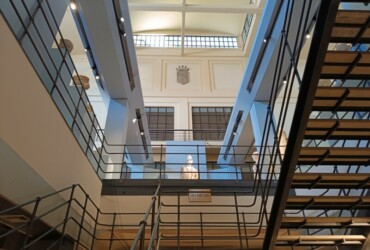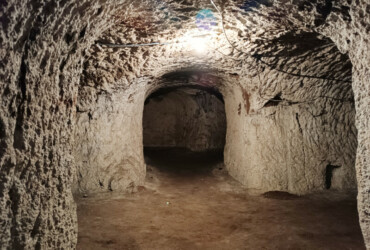
Last January (2024), the Celio Archaeological Park and the Forma Urbis Museum reopened to the public, inside the building of the Ex Palestra della Gioventù Italiana del Littorio. A museum that houses a jewel of ancient Rome, which restores a part of the city’s history represented on a map (or what remains of it); therefore, I could not help but go and visit it. The Forma Urbis Romae is a marble map which reports the ancient Rome form, at the time the map was made; it is therefore a unique vision of the urban area of the ancient city of Rome.
Forma Urbis: the history
The Forma Urbis Romae is a map engraved under the emperor Septimius Severus between 203 and 211 AD, on 150 marble slabs; it was originally displayed on the wall of a room in the Temple of Peace and was later incorporated into the complex of SS. Cosma and Damiano. This marble map is a very important document of the past, as it restores what ancient Rome was. The original size of the map was approximately 18x13m and at least 13,550,000 m2 of the city were represented. However, looking at its position, the fact that it was difficult to read and the lack of details, it is assumed that it had more of a function of propaganda and celebration of power, while still providing an overall view of the city. Hundreds of pieces of the map were found starting in 1562; these fragments, however, seem to constitute only a tenth of what the original plan was. Based on a small part of the fragments found, about 200, has it been possible to reach an identification and an ideal placement on the modern topography.
The Forma Urbis Romae was made up of 150 slabs, applied to the wall with iron pins; on the slabs, there were also thin incisions depicting the plans of the buildings of Rome of the 3rd century AD, at an average scale of about 1:240. After its discovery in 1562, many fragments were lost and dispersed. What remains today is about a tenth of the total plan: of the hundreds of fragments found over the centuries, only about 200 have been identified and ideally placed on the modern topography. The marble plan has been part of the collections of the Capitoline Museums since 1742. The last overall exhibition of the originals was held between 1903 and 1924 in the garden of the Palazzo dei Conservatori; then, until 1939 some significant nuclei were visible in the Antiquarium of Celio.
Forma Urbis: the museum
The museum is inside the former Palestra della Gioventù Italiana del Littorio and houses the surviving fragments of the great map of Rome, previously kept in the Garden of the Palazzo dei Conservatori.
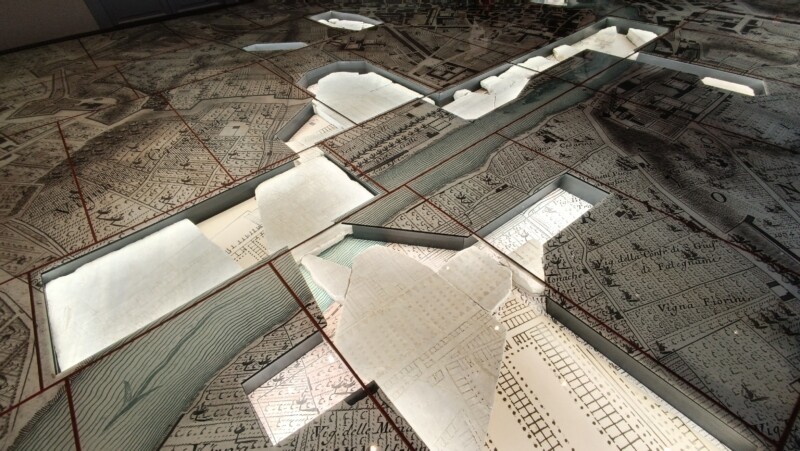
Inside the museum, the remains of the forma urbis are placed on the floor, covered by a sheet of glass to allow you to walk “on top” of them; the fragments of the map are placed above the Pianta Grande by Giovanni Battista Nolli from 1748, to allow you to give a geographical location to what you are looking at. This allows you to “walk through ancient Rome”, seeing how it has changed from the forma urbis to Nolli’s map up to the present day. Everything is located in a single room, large enough to store the finds, to which the visitors may have access from a door a few steps from the ticket office; backpacks must be left in the wardrobe lockers and on rainy days they give you a shoe cover to avoid dirtying the glass. It is also interesting to combine a visit to the Celio archaeological park (inside which the museum building is located) with a visit to the museum.
Useful information
Address:
Opening hours: Tuesday to Sunday from 10:00 to 16:00 (last admission one hour before)
Closed on Mondays, December 25th, May 1st
Admission ticket:
Full Resident €6.50 – Reduced Resident €5.50
Full Non-Resident €9.00 – Reduced Non-Resident €6.50
Free admission with the MIC Roma Card.