The Centrale Montemartini is one of my favourite museums in Rome and, in my opinion, it’s a must-see in town. This is because I believe it is a perfect example of the recovery of Roman industrial archaeology to give it a new use; this in addition to the very particular contrast between the structures of the plant (for example the engines that served to operate it) and the antiquity of the finds exhibited in the rooms.
Centrale Montemartini: the birth of the museum
The Centrale Montemartini was born as a thermoelectric plant, located along the Via Ostiense.
 The museum was inaugurated on June 30, 1912, they actually entered into service the following day, and it was the first electricity production plant of the Municipal Electricity Company. The plant was dedicated to Giovanni Montemartini, a former councillor who died in the council chamber during a debate in 1913. The plant was decommissioned in 1963 because, after half a century of activity, the plant became obsolete and was no longer economically viable.
Centrale Montemartini: the birth of the museum
Then, it was abandoned or used as a warehouse, in addition to the idea of demolishing it;
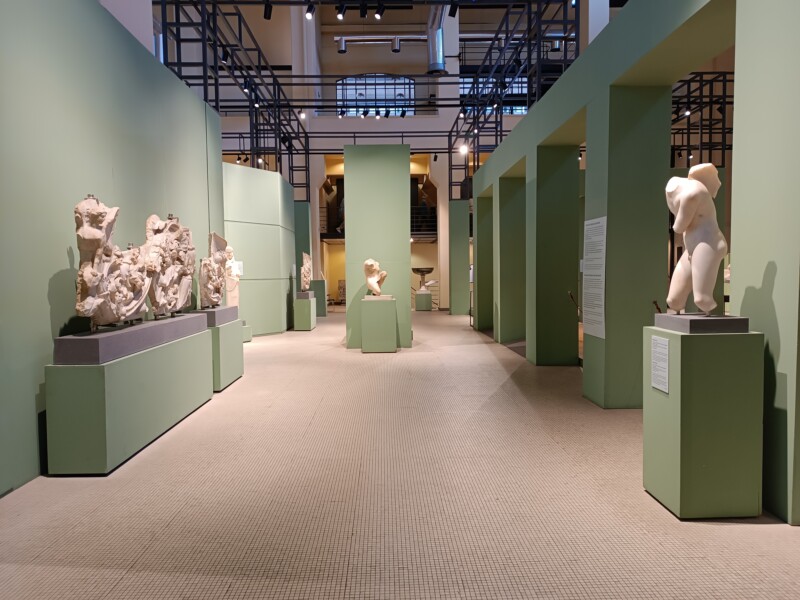 it was renovated in the 1980s by Acea: the engine room and the boiler room were transformed into exhibition spaces, while the remaining rooms became offices, laboratories and warehouses. In 1995, a temporary exhibition was created here during renovation work on the Capitoline Museums, so the public could continue to see the works temporarily transferred here. The history, then, is there for all to see: from a temporary arrangement, the Centrale Montemartini became a museum in all respects, in particular, it became a detached hub of the Capitoline Museums. In 2016, there was a first expansion of the museum hub: the former boiler room number 2 was opened, where the carriages of the papal train of Pope Pius IX are exhibited; that very year I went to the press conference, later recounting the visit in a post dedicated to the train room of Pius IX. In 2017 was opened the room devoted to the sarcophagi of the imperial age (section “From myth to miracle”).
Centrale Montemartini: the exhibition
The greatest haste of the collections exhibited in the museum were identified thanks to two seasons of
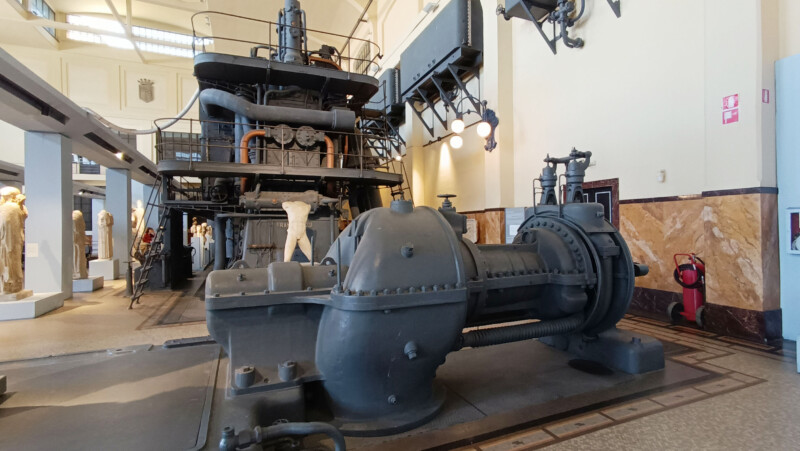
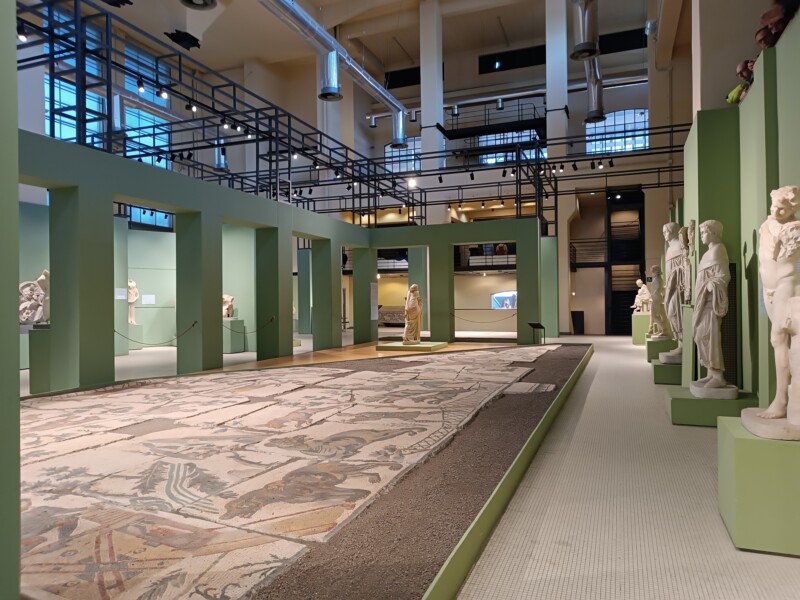 excavations: those conducted in the second half of the 19th century, after Rome had already become the capital of the Kingdom of Italy and those of the 1930s carried out during the twenty years of fascism. The exhibition is organized according to a thematic criterion and also highlights the area where the exhibited finds were found. The exhibition is organized according to an alternation of classical archaeology and industrial archaeology finds, with the machinery of the power plant acting as a backdrop to the sculptures. The presence of the power plant’s Diesel engines, located in the engine room, is certainly suggestive.
Centrale Montemartini: the rooms
Let’s see some details about the exhibition rooms, with the consequent organization of the finds:
Sala Colonne: it is located on the ground floor and exhibits finds from Republican Rome. Here we find portraiture from the 1st century BC, remains of burials from the ancient necropolis of the Esquiline, and the introduction of luxury into the private sphere (2nd century BC). In two side rooms there are also finds from the imperial age: a series of Roman sarcophagi, including that of Crepereia Tryphaena;
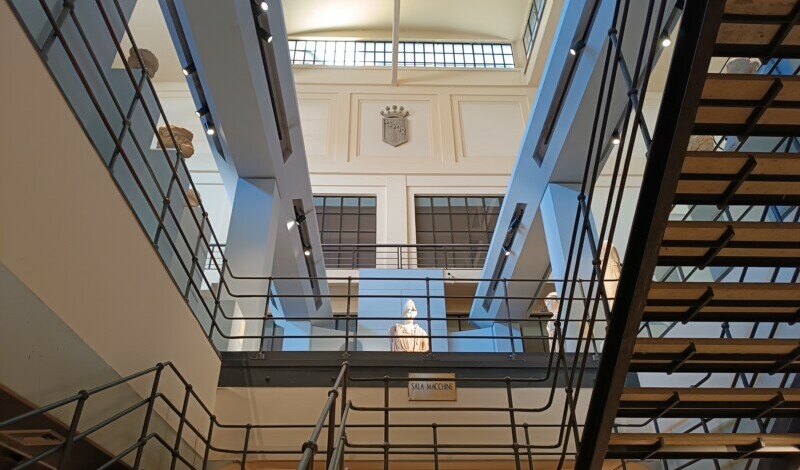
Sala Macchine: on the first floor, it presents finds from the monumental centre of Rome (Circus Flaminius, Temple of Apollo Sosianus, Capitoline Hill, Largo di Torre Argentina, Theater of Pompey, Celio);
Boiler Room: still on the first floor, it offers finds that originally adorned gardens (horti) and residences (domus) of both imperial and private property, located in particular in the eastern area of the city (finds from horti Sallustiani in the district of the same name, horti Variani at Porta Maggiore, horti Liciniani and others, including perhaps the horti Lamiani, of the Esquiline); numerous Roman copies of Greek statues;