At the end of September 2016, I had the opportunity to visit the Equinox Mausoleum. It’s one of the ancient Rome’s tombs built along Via Appia Antica and today can only be visited by guided tours because it is located inside the Villa Passarelli, a privately owned villa (the cultural association Info.Roma organised the
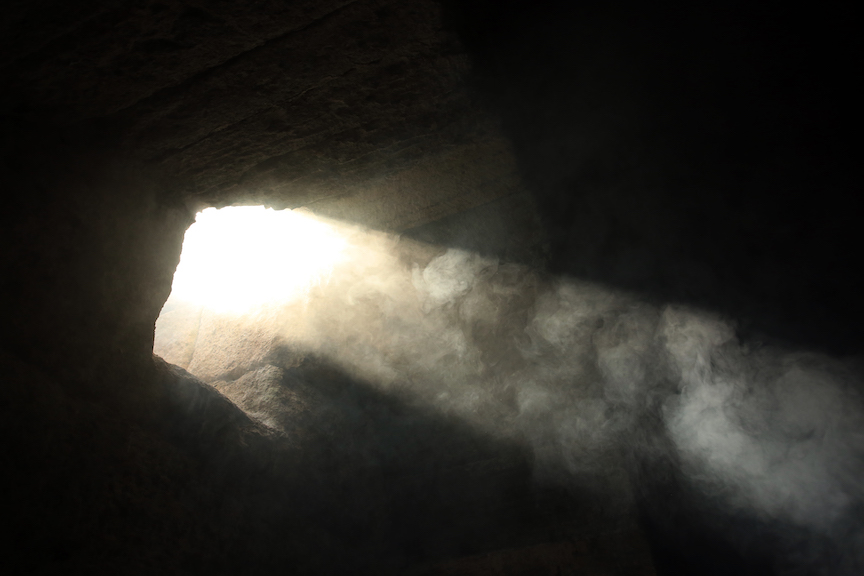
 visit).The mausoleum was built on the side of the road, but today it is impossible to understand it by observing the villa from the outside! Unfortunately, the external part of the structure no longer exists; only thanks to ancient stories today we know that, structurally, it must be similar to the mausoleum of Cecilia Metella. It is called “mausoleum of the equinoxes” due to the particular effect which can be seen inside it during the equinoxes, days that in ancient times were very important and the
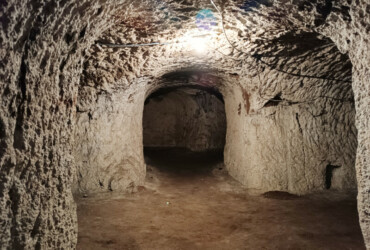
 mausoleum was built with an exact structure just to obtain this particular effect. Today we have just a few historical information about this mausoleum: it was dated around 200 BC, it is not known until it remained in use and today it is remembered as an “unknown” burial because it is not known which family owned it in ancient times. We know something more thanks to reports from Piranesi, which reports the presence of 4 columns and a trabeation along the entire internal perimeter; always the Piranesi speaks of stucco adornment in the same crypt. From the garden, we enter the small hypogeum chamber of the mausoleum, and we can still see the niches where the buried bodies were. On the left, once you are inside, you can see a closed window and the foundations of a house that, in reality, is outside the property where the mausoleum today is located. At the exact time when the sun enters the open window, opposite the entrance, it is possible to understand the mausoleum in its entirety (including the name) thanks to the smoke of incense.
 Obviously, you will be able to understand better what happens when visiting the mausoleum on the exact day when the equinox falls. There is a similar effect, because it works in the same way, even in the Pantheon (which, however, is born as a temple and not as a burial place). The guide, very well prepared, leads us to discover this place telling us all the history of the mausoleum in an impeccable manner and without neglecting any
 aspect. In the garden, there is a sort of small “exhibition” of ancient drawings and old photos that show us, visitors, the appearance that the mausoleum had at the beginning of its history. This exhibition surely it helps to realise better how this place appeared through ancient testimonies, including that written (and drawn) of Piranesi. Unfortunately, it is not possible to take pictures of this small exhibition. To conclude, I advise you to keep an eye on the association official website to find out when they will make the next visit to the mausoleum (you will be requested to pay also 2€ as membership price. The tour is in italian, but if you call them, maybe you will be able to arrange a visit in english).